

Baking butter has a major influence on the taste of baked goods. The simpler the pastry and the fewer accompanying ingredients, the more important butter becomes. It determines softness, richness, aroma, flavor release and baking stability: a crisp cookie, a tender brioche or a moist sponge cake that stays soft.
This article explains the different types of baking butter, their advantages and limitations, and reviews popular brands in Vietnam so pastry kitchens can test and identify the products best suited to their recipes.
Understanding today's common types of baking butter
Below are the 5 main groups of baking fats and their common subcategories:
1. Dairy butter – pure butter
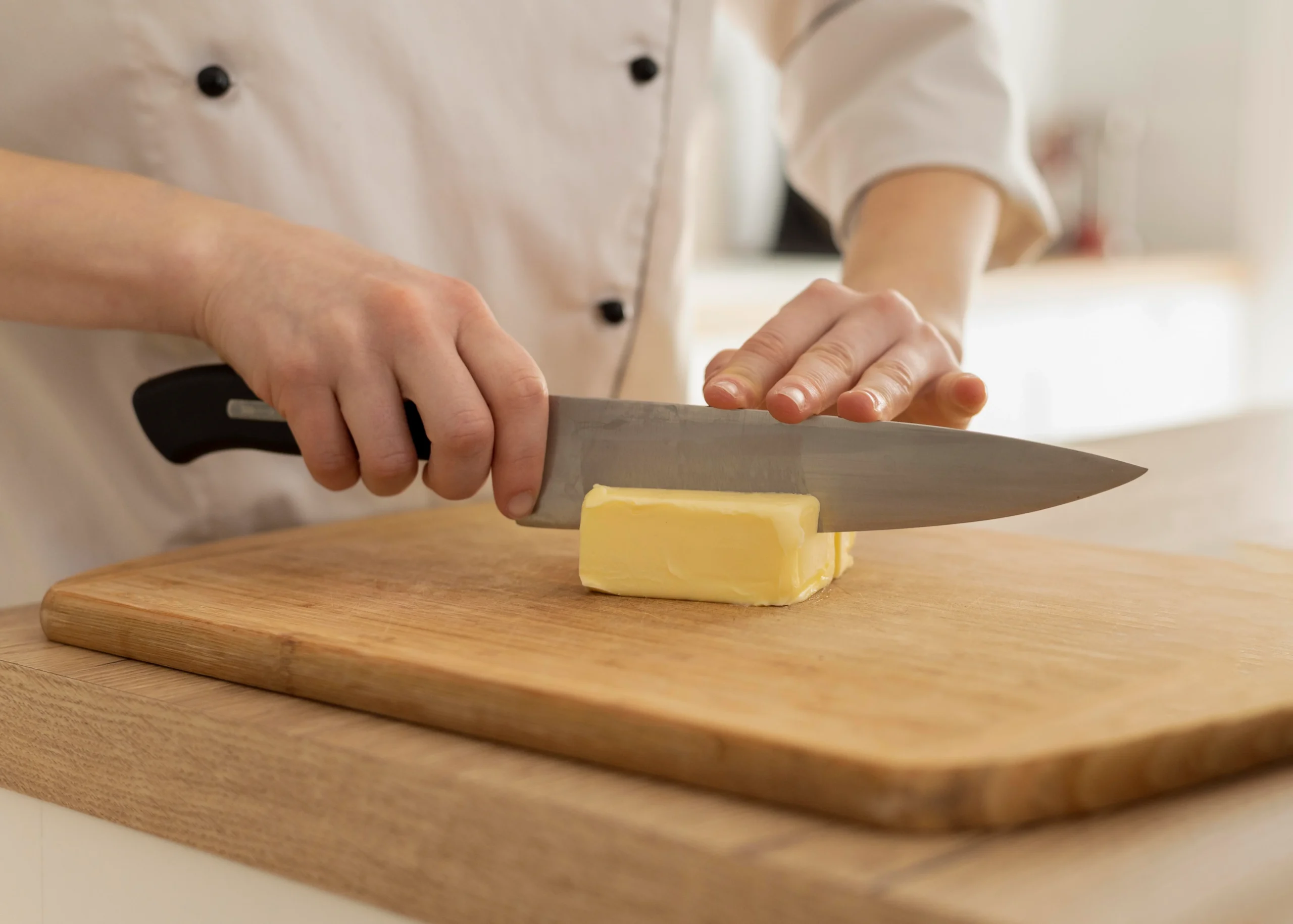
Dairy butter is pure butter made from cow's milk cream, containing around 80–82% milk fat. It is commonly used in European-style and premium baked goods, known for its natural milky aroma, good structure and full flavor.
Common dairy butter varieties include:
- Unsalted butter: contains no salt or less than 0.1% salt and is the most widely used butter for baked goods. Its pure dairy aroma makes flavor easy to control and suits all European-style pastries.
- Salted butter: contains salt, with a strong aroma and slightly salty taste. It is commonly used in savory pastries and fillings, but less often in other baked goods because it makes the recipe's salt content harder to control.
- Sweet cream butter: made from unfermented fresh cream, it has a milder, pure dairy flavor than cultured butter and around 80% fat. It suits cookies, muffins and basic sweet baked goods. Despite the name, it contains no sugar.
- Cultured butter: cream is fermented with lactic cultures, creating a slight tang, deep aroma and refined richness. It has a high fat content of around 82–84%, a deep yellow color and a pliable, smooth texture. Its flavor is well suited to pastries.
Advantages of dairy butter in baking:
- A natural, distinctive milky aroma that sets it apart from margarine.
- Creates good texture: crisp, tender cookies; soft, smooth sponge cakes; clearly defined layers in croissants and Danish pastries; and a more buttery aroma in tarts and biscuits.
- Retains air well when creamed with sugar, trapping many small bubbles that improve rise and softness in ways margarine or butter-flavored oil cannot match.
- Creates a melt-in-the-mouth sensation. Dairy butter's melting point (≈32–35°C) is close to body temperature, so it melts readily when eaten, especially in cookies, tarts and brioche.
Limitations of using dairy butter in baking:
- More expensive than other options, making it best suited to premium bakeries and 4–5-star hotels, especially those serving international customers.
- Melts easily and requires suitable storage conditions, potentially affecting croissant lamination or cookie rise.
- Short shelf life.
Common baking applications for dairy butter:
- Cookie
- Sponge cakes, pound cakes
- Shortbread
- Pastry, croissant
- Muffin
- Milk and butter bread
- Buttercream
- Butter sauces and fillings
Dairy butter brands for baking in Vietnam
- Président (France) – a pronounced milky aroma and deep, luxurious richness, imported from a leading French dairy region. Ideal for hotel pastry kitchens and premium bakeries, especially brioche, tarts and pastries.
- Avonmore (Ireland) – rich and creamy, with a milky aroma and clean finish, imported and made from milk from Ireland's No. 1 dairy farms. Its delicate, balanced flavor suits cupcakes, mousses, sponge cakes and more.
- Anchor (New Zealand) – a naturally mild salty flavor, stable when whipped and widely used in Vietnam
- Elle & Vire (France) – soft, delicately aromatic and easy to handle for pastries, suitable for premium products
- TH True – good value and consistent quality
2. Margarine
Margarine is made from vegetable oils such as palm or sunflower oil and contains 60–80% fat. It is known for its low cost, heat stability, mild aroma and easy storage, and can be used in most baked goods at a lower cost than pure dairy butter.
Advantages of margarine in baking:
- Strong aroma, often with synthetic butter flavoring.
- Low cost, suitable for industrial production.
- High heat stability and easy handling for rolling and shaping, especially in hot, humid bakery conditions such as those in Vietnam.
- Easy to store for extended periods, helping optimize inventory management and reduce waste.
Limitations of margarine in baking:
- Rich, but without the pure dairy character of butter; best suited to budget baked goods.
- Some baked goods require blending with pure butter to enhance aroma. The ratio must be balanced to maintain good flavor and avoid an artificial or heavy mouthfeel.
- A slightly strong aftertaste when used in large amounts.
- Applications vary by product; fewer options are suitable for soft bread, sponge cakes or puff pastry.
Common baking applications for margarine:
- Cookies and industrial production lines.
Popular margarine brands for baking in Vietnam:
- Meizan Margarine – affordable, stable and delivers attractive browning.
- Tường An Margarine – easy to whip, suitable for industrial production.
3. Butter blends (margarine mixed with pure butter)
Butter blends are convenient for bakeries because they combine dairy butter and vegetable fat in a fixed ratio. This reduces finished-product costs while adding a buttery aroma and maintaining consistent flavor. In other words, they suit bakeries and production facilities seeking to optimize ingredient costs while retaining a genuine butter aroma.
The market offers a wide range of butters for different segments and applications. The main distinction is the ratio of pure butter to vegetable oil or margarine, which determines aroma, richness, cost, heat stability and suitable applications.
Some premium products contain around 50% dairy butter and can be used directly without blending. Common market options contain a lower proportion, giving bakers room to adjust and control flavor and costs.
Advantages of using butter blends in baking:
- Convenient and ready to use with a buttery aroma, requiring no blending and delivering consistent flavor in every batch.
- Balance flavor and cost for mainstream baked goods.
- Good pliability and easy lamination, suitable for pastries, especially when a temperature-controlled room is unavailable.
- Suitable for production at any scale, from small to large.
Limitations of butter blends in baking:
- These products have few disadvantages; suitability mainly depends on the application and target customers. If flavor is not the top priority, the audience is mainstream, or other ingredients can balance aroma and richness, they can be the most suitable solution.
Common baking applications for butter blends:
- Croissants and basic pastries
- Sweet bread, milk bread and sandwich bread
- Crisp cookies and molded biscuits
- High-volume baked goods
- Mid-priced sweet and savory fillings and toppings
Popular butter blend brands for baking in Vietnam:
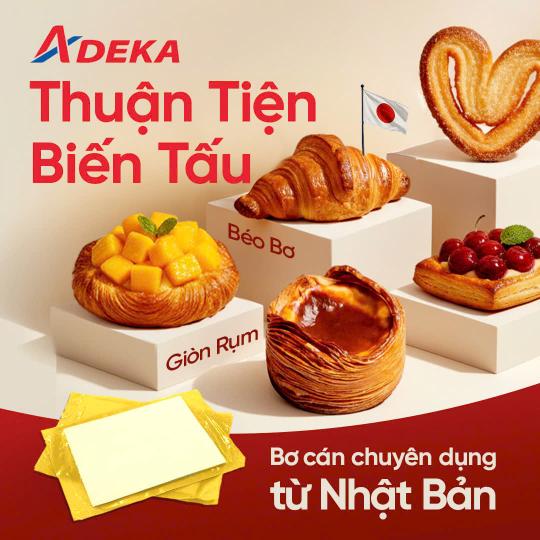
- Adeka – block and laminating butter made with Japanese technology, designed for layered pastries
4. Butter substitutes made from animal fat or marrow
Block butter substitutes are usually made from animal marrow or fat. Depending on the product and intended use, milk powder may be added to enhance flavor. They are widely used in large production facilities worldwide for cookies, biscuits, sponge cakes and soft bread. For bakeries and production kitchens, they can also be an efficient choice for laminated pastries.
Advantages of butter substitutes in baking:
- Stable costs and supply, with less exposure to changes in global milk production.
- Delivers enjoyable, consistent results with little noticeable difference from regular butter.
- Can be used in most baked goods, depending on the product.
- A good upgrade from butter-flavored oil that retains the appeal of dairy/pure butter, improving taste while maintaining healthy margins.
- Do not soften quickly in warm conditions or separate during baking, making them easy to handle in large-scale production.
Limitations of butter substitutes in baking:
- Flavor and applications depend on the formula: each product has distinct characteristics based on its ingredients and needs testing to identify suitable uses. Not every fat- or marrow-based substitute produces good croissants, puff pastry or soft bread.
Common baking applications for butter substitutes:
- Crisp cookies, molded biscuits and industrial baked goods
- Bread requiring a glossy finish, richness and firm structure
- Traditional savory pastries and savory-filled baked goods
- Some products require recipe optimization to achieve the right texture.
Leading butter substitute brands for bakeries and production facilities in Vietnam:
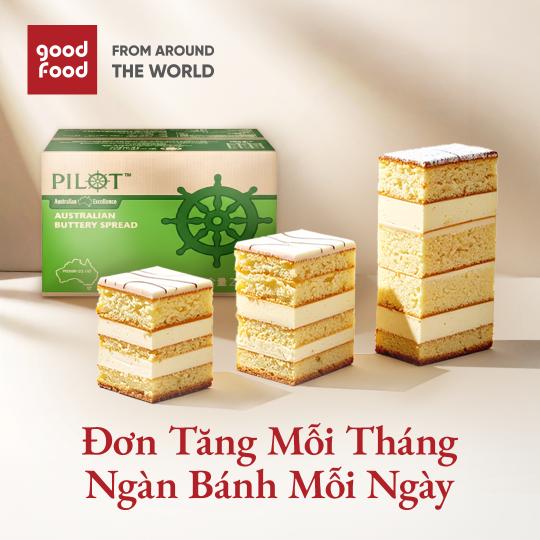
- Pilot – imported from Australia, with a milky aroma and distinctive flavor, suitable for soft bread, sponge cakes, chiffon cakes and choux pastry
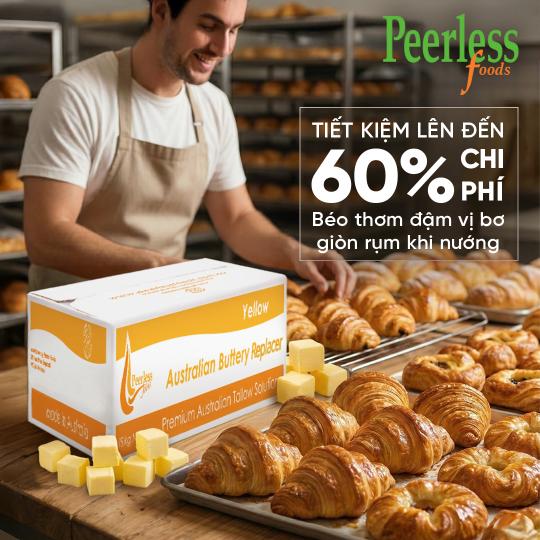
- Peerless – a butter alternative imported from Australia that helps save up to 60% compared with dairy butter. Best suited to products requiring crispness and stable structure, such as biscuits, brownies and cookies.
5. Butter-flavored oil for baking
Butter-flavored oil is an oil-based fat made from vegetable oils such as palm, sunflower or soybean oil, then blended with butter flavoring to imitate butter's aroma in baking.
In simple terms, butter-flavored oil is a liquid product similar to cooking oil but with a butter aroma. It is commonly used in simple recipes, particularly industrial production of high-moisture, budget baked goods.
Advantages of baking butter
- The least expensive option among butter products.
- Blends easily and suits moist baked goods such as muffins.
- No whipping required, allowing quick preparation.
Disadvantages of butter-flavored oil in baking:
- Less richness than other butter products.
- Limited flavor; does not deliver the buttery aroma of other butter products.
- Does not create the airy, fluffy texture of dairy butter.
- Unsuitable for cakes requiring a high rise.
Common baking applications for butter-flavored oil:
Butter-flavored oil often suits industrial bakeries specializing in brownies, muffins or certain dietary baked goods, as it is easy to replace with seed oils.
Popular butter-flavored oil brands in Vietnam:
- Peerless – a baking fat imported from Australia in 18kg tubs, formulated for large production lines that need to balance cost and flavor
- Golden Olina – made in Malaysia, supplied in 16kg packs, suitable for baking
- Youmy – adds a strong buttery aroma, suitable for bread, pastries and desserts
Comparison of baking butter options in Vietnam
Below is a quick summary comparing the characteristics and baking applications of each type of butter:
| Type of butter | Flavor | Fat Content | Price | Common applications | Our Brand |
| Unsalted Butter | Pure dairy flavor, unsalted | Cao | Cao | All European pastries, cakes, cookies, creams, mousses | Avonmore, Elle & Vire, Anchor, TH True |
| Salted Butter | Lightly salted, strongly aromatic | Cao | Cao | Savory pastries | Président, Anchor |
| Sweet Cream Butter | Mild aroma, fresh cream flavor | Cao | Cao | Cookies, cakes, muffins, basic sweet baked goods | Avonmore |
| Cultured Butter | Deep aroma, slightly tangy | Cao | Cao | Premium croissants, tarts, French pastries, brioche | Elle & Vire |
| Margarine | Mild aroma with synthetic butter flavoring | Medium | Low cost | Cookies, sweet bread, budget cupcakes, industrial production | Meizan, Tường An |
| Butter blends | Moderately aromatic, with a milky note | Medium to high | Affordable | Basic pastries, sweet bread, high-volume bakeries | Adeka |
| Butter Substitutes | Richness and aroma vary by product | Cao | Moderate | Cookies, basic pastries, sponge cakes or soft bread, depending on the product | Peerless, Pilot |
| Butter-flavored oil | Little aroma or a mild butter aroma, depending on the product | Low | Low cost | Muffins, brownies, quick breads, moist cakes, industrial production | Peerless, Pin & Peel, Golden Olina, Youmy |
A guide to choosing butter for each type of baked good
1. How to choose butter for sponge cakes
Basic sponge cake recipes often use melted butter.
For the premium segment, unsalted dairy butter is the best choice for sponge cakes because it creams easily, helping cakes rise softly with an airy texture and natural aroma. The resulting cake has a stable structure without heaviness and a rich, fragrant taste. Pure butter brands generally differ only modestly, allowing businesses to choose according to taste and cost.
For the mid-range segment, block butter blends such as Adeka or milk-flavored butter substitutes such as Pilot can also be used. A common way to enhance flavor is to combine dairy butter with readily blendable products such as butter blends or butter substitutes.
Fats not recommended for sponge cakes:
- Margarine (strong aroma, limited cake rise)
- Butter-flavored oil (cannot be whipped)
2. How to choose butter for cookies
What butter is used for cookies? Almost all types of butter and butter substitutes can be used, depending on production goals.
Butter gives cookies structure, crispness and richness. For flavor-focused, higher-priced, lower-volume products aimed at major holidays or seasonal menus, dairy butter remains an excellent choice: it provides a distinctive aroma, a crisp yet tender melt-in-the-mouth texture and a premium feel. Ideal brands for butter cookies include Avonmore and Président.
For large-scale production, cookie butter selection usually focuses on texture, flavor and finished-product costs. Butter blends and butter substitutes are among the most effective solutions:
- Butter blends retain a milky aroma at a lower price than pure butter.
- Depending on the product, butter substitutes such as Peerless can give cookies a notably crisp texture that lasts longer than with many comparable products.
Butter-flavored oil can also be used in cookies, although it may leave an oily feel. Consider the target customer and market segment when choosing.
3. How to choose butter for bread
In soft bread and brioche, butter adds softness, moisture and creamy aroma. Almost any type of butter or baking fat can be used for these breads:
- Dairy butter: provides a milky aroma and premium mouthfeel, but is less commonly used in mainstream bakeries.
- Margarine and butter-flavored oil: widely used for their low cost, helping retain moisture and keep bread soft longer.
- Some specialist butters, such as Adeka, a Japanese butter brand with formulations developed specifically for bread, keep bread soft for longer, extending its selling window and reducing waste.
Where can you buy baking butter?
GoodFood is an authorized importer and distributor of baking butter across a wide range of segments and applications, including brands exclusively distributed in Vietnam. GoodFood currently distributes throughout Ho Chi Minh City, Hà Nội, Đà Nẵng and surrounding areas.
Below is the range of butter products distributed by GoodFood:
| Segment | Our Brand |
| Premium Butter | Président butter (pasteurized dairy butter sheets, salted butter and unsalted butter) |
| Mid-range to premium baking butter | Avonmore butter (salted, unsalted and sweet cream butter) |
| Butter for the mainstream segment | Adeka butter (butter blends in blocks & sheets), Peerless butter (a butter substitute made from beef fat), Pilot (a butter substitute made from animal marrow) |
Why buy baking butter from GoodFood?
1. Authorized importer & distributor with assured origin
GoodFood imports directly and officially from France, Ireland, Australia and other countries, ensuring transparent product information and quality without intermediaries. This helps reduce the risk of counterfeit or poor-quality goods and maintain consistent finished products.
2. A diverse range of butter options for every business, from bakeries and production facilities to professional pastry kitchens
GoodFood is one of the few distributors offering almost every type of baking butter on the market, carefully selected from leading ingredient-producing regions such as France, Ireland and Australia. Its extensive portfolio meets needs ranging from enhancing flavor to optimizing costs, allowing bakeries, production facilities and professional pastry kitchens to choose flexibly and switch between products in the same segment as market trends evolve.
3. Reliable supply
Reliable supply and long shelf life, keeping pace with festive seasons and market sales peaks.
4. Professional delivery
GoodFood uses dedicated refrigerated vehicles for temperature-sensitive products, ensuring they arrive fresh and with consistent quality. Its extensive distribution network focuses on Hà Nội, Ho Chi Minh City, Đà Nẵng and surrounding areas, enabling fast, reliable deliveries throughout the year, including peak seasons.
5. Technical advice for specific bakery applications
GoodFood regularly collaborates with international pastry chefs to provide one-to-one advice on techniques and product development. Customers receive support in selecting ingredients, optimizing workflows and developing promising pastry ranges suited to Vietnamese market trends.
6. Favorable pricing and credit terms, with benefits for bulk purchases
GoodFood offers a broad bakery ingredient portfolio, from butter, milk, cheese and cream cheese to whipping cream, helping customers optimize shipping costs, reduce inventory pressure and benefit from attractive volume discounts.
7. Support with samples, recipes and ingredient testing
GoodFood supports bakeries at every stage, from testing new ingredients to adapting and optimizing recipes.
Frequently asked questions about choosing butter for delicious baked goods
1. Is baking butter the same as unsalted butter?
Not always, but unsalted butter is the most widely used because it makes flavor and texture easier to control. Apart from savory pastries and fillings, most baked goods today are made with unsalted butter.
2. Can salted butter replace unsalted butter in baking?
Yes, but the flavor will be stronger and you should reduce the salt in the recipe (by 2–3g for every 100g of salted butter). Bakeries will need to test to balance the flavor. However, consider using salted butter only for savory pastries or savory fillings.
3. Is margarine butter?
Margarine, often called vegetable butter, is not technically butter because it is made entirely from vegetable oils. However, it is commonly called butter because it can replace traditional dairy butter in many baked goods.
4. Can margarine replace dairy butter?
Yes, but only for budget pastries or those that do not require a natural butter aroma.
- Dairy butter: aromatic and melts in the mouth
- Other substitutes: affordable and stable, but blending is needed to improve aroma
5. Is margarine harmful?
Modern margarines often have reduced trans fat, but they are still less aromatic than dairy butter and better suited to industrial baking.
6. Can sponge cakes be made with margarine?
Yes, but it is not ideal. Margarine still helps the cake rise and stay soft, but the texture is less airy and the flavor is less refined. It remains suitable for large-scale production and budget cakes.
7. Can cookies be made without butter?
Yes, but the cookies will be less aromatic. You can substitute butter-flavored oil for budget cookies, or cooking oil, although the cookies will be soft rather than crisp.
8. Can sweet bread be made without butter?
You can omit unsalted butter, but the bread will be:
- Less aromatic and less rich
- Quicker to dry out
- Less soft than when made with butter
If butter is unavailable, you can substitute:
- Margarine (low cost)
- Cooking oil (makes cakes soft but less aromatic)
- Butter-flavored oil (retains moisture well in budget baked goods)
9. Should butter be cold or softened for baking?
It depends on the pastry:
- Cold butter: cookies, croissants, puff pastry
- Softened butter: sponge cakes, creaming, buttercream
- Melted butter: brownies, muffins
10. Does fat content matter in baking?
It is not especially important because it is difficult to distinguish in the finished product. Depending on the pastry, flavor and texture are generally the most important factors when choosing baking butter.
Contact us now for more advice on bakery ingredients, request samples and explore bakery industry trends, including developments in butter alternatives!